
Module 1
(lecture, V. Stilinović)
Snow White and the Seven Crystal Systems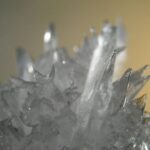
What are crystals? Who first noticed them? When, how, and why did people start studying them, and what did they conclude? In the introductory lecture, we will learn about the basic properties of crystals and review more than two millennia of ingenious discoveries and persistent misconceptions in their study.
Module 1
(practical teaching, K. Molčanov)
 Workshop on symmetry and “classical” crystallography with models of crystals from all crystal systems and some symmetrical objects from everyday life. What is chirality? Chirality in nature (e.g., snails), in everyday life (e.g., screws), and chirality in chemistry and crystallography.
Module 2
(lecture, K. Molčanov)
What is in crystals?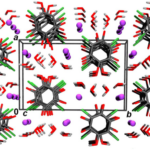 What is diffraction? What are electromagnetic waves? Why do we not see atoms with a microscope? Why do we see them with X-ray diffraction? How does X-ray diffraction work? Various types of instruments, such as the great discoveries of X-ray crystallography in the last 100 years. X-ray crystallography in chemistry and biology.
Module 2
(practical classes, Vl. Stilinović)
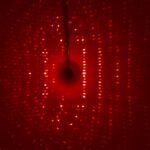 The phenomenon of diffraction will be demonstrated using everyday examples, and a sketch will be made of how diffraction data can be used to calculate geometric parameters describing the structure of the object on which the diffraction occurred. For example, by laser diffraction on a DVD, we can measure the distance between individual ‘grooves’ of a DVD, just as by X-ray diffraction on a crystal, we can measure the distances between atoms in a crystal. In the following, we will look at what some crystal structures look like and what regularities we can observe in them.
Module 3
(lecture, N. Tomašić)
Crystallography Laboratory in Nature: The Wonderful World of Minerals
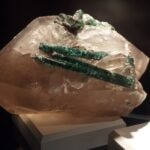
How and where crystals form in nature: from magma, seas, lakes, and rivers to deserts, hot solutions, and steam. What are minerals, and where do we find them? What types of minerals are there, and what groups do we divide them into? Do all minerals have beautiful crystals, and can we produce them in the laboratory?
Module 5
(lecture, Z. Štefanić)
How do we see protein structures with X-rays?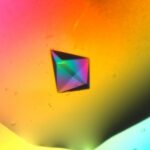 Proteins are extremely important for the entire living world. To understand what they do and how they perform their function in our body, we need to know what they look like. We cannot see them with any microscope, no matter how much it magnifies. But here again, X-rays come to our aid. In the lecture, several examples of proteins that play important roles in the human body will be shown using the PyMOL visualization program. We will learn which building blocks all proteins in our body are made of and what amazing shapes they can form.
Module 5
(practical part, computer workshop, Z.Štefanić)
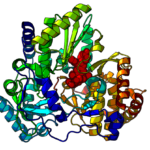 In an interactive workshop, students would try to visualize the structure of a protein themselves, set up some basic display methods, and measure distances between atoms. For this, computers would be needed (at least one per group of two or three students).